
As immersive technologies continue to evolve, olfactory VR is emerging as one of the most transformative frontiers in virtual reality. By integrating the sense of smell into digital environments, olfactory systems significantly enhance realism, emotional engagement, and memory retention.
However, not all solutions are created equal. Choosing the right olfactory VR device is critical for achieving accurate scent delivery, seamless VR integration, and a truly immersive multisensory experience. Below, we explore the key technical and functional features to evaluate when selecting or designing olfactory-enabled VR systems.

One of the most important aspects of any olfactory VR system is precision in scent generation and delivery. In virtual environments, timing is everything, smell must align perfectly with visual and audio cues.
Research in wearable scent systems highlights that real-time blending and microdosing are essential for maintaining immersion without overwhelming the user’s olfactory system .
Modern olfactory VR devices are moving beyond single-scent output systems. Real-world environments are complex, and VR simulations must replicate that complexity. Key capabilities to look for include:
Some advanced systems can blend up to eight fragrance elements simultaneously, enabling highly realistic environmental replication such as forests, urban spaces, or industrial settings.
This feature is particularly critical in olfactory VR applications such as training simulations, gaming, and experiential marketing.
Latency is one of the most critical performance factors in olfactory VR. Even a slight delay between a virtual trigger and scent release can break immersion and reduce user trust in the simulation.
High-performance olfactory VR devices should include:
Real-time synchronization ensures that scent appears as a natural extension of the virtual world rather than an external add-on.
For olfactory VR to scale beyond laboratory or industrial environments, devices must be comfortable, lightweight, and compatible with mainstream VR headsets. Important design considerations include:
Recent advancements in wearable scent technology aim to overcome the traditional limitation of bulky olfactory displays, making them more suitable for continuous VR use .
A high-quality olfactory VR device should support a diverse and expandable scent library. Limited scent options significantly reduce realism and application scope.
Ideal systems provide:
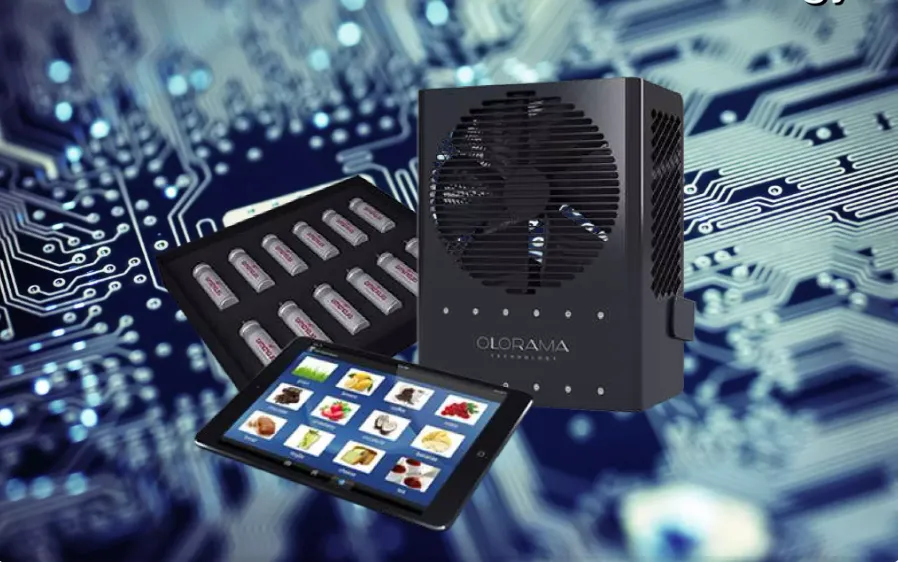
Platforms like Olorama’s digital scent technology already support extensive scent catalogs designed for professional applications such as simulation, marketing, and immersive storytelling .
The true power of olfactory VR lies in software integration. A robust olfactory VR device must offer seamless connectivity with VR development ecosystems.
Key requirements include:
This enables developers to design immersive experiences where smell is fully integrated into gameplay mechanics, narrative progression, or training modules.
Since olfactory VR devices interact directly with human sensory systems, safety and hygiene are essential. Look for:
Proper scent regulation ensures long-term usability without causing fatigue or discomfort.
Olfactory VR is increasingly used beyond entertainment, including:
A strong olfactory VR device should therefore support both enterprise-grade scalability and consumer-level accessibility. This dual capability ensures broader adoption across industries.
At Olorama, we are actively contributing to the evolution of olfactory VR systems through professional digital scent technology designed for immersive environments. Our solutions focus on delivering precise, scalable, and realistic scent experiences that bridge the gap between physical and virtual worlds.
By combining hardware innovation with software integration, Olorama helps developers and organizations unlock the full potential of multisensory VR.
The future of immersive technology depends on more than just visuals and sound. As olfactory VR continues to mature, the integration of smell will become a defining factor in creating truly realistic digital experiences.
When evaluating an olfactory VR device, prioritizing precision, multi-scent capability, low latency, ergonomic design, and developer integration is essential for achieving next-generation immersion.
Olfactory VR extends immersion by adding the sense of smell to visual and auditory stimuli. Unlike traditional VR, which relies mainly on sight and sound, olfactory integration activates emotional and memory-related brain regions more deeply, resulting in more realistic and memorable experiences.
Synchronization is achieved through software-hardware communication between the VR application and the scent emission system. When a predefined event occurs in the virtual world, the olfactory VR device triggers a corresponding scent release.
Yes, more advanced olfactory VR setups are capable of combining multiple scent profiles to recreate layered environments.
Modern devices are increasingly designed with user comfort in mind, allowing extended use without significant sensory fatigue.
Olfactory VR is gaining traction across several sectors beyond entertainment. It is particularly valuable in training simulations, healthcare applications such as exposure therapy, education, safety and emergency preparedness, and immersive marketing experiences where emotional engagement is critical.
High-end systems typically allow extensive customization through software interfaces or SDKs. Developers can assign specific scents to virtual triggers, adjust intensity levels, and even create layered scent compositions.
Yes, scalability is a key consideration in modern olfactory VR design. Systems are being developed to support both enterprise environments with multiple synchronized units and smaller-scale consumer applications.